

Teresa Obedzinski
Naugatuck High School
TEACHER'S SNAPSHOT
Course Topics/Big Ideas:
Immigration, Industrialization, and Progressivism
Town:
Statewide
Grade:
High School
Lesson Plan Notes
Asian immigrants were both essential to U.S. development and systematically denied full belonging. Key court cases including People v. Hall, In re Ah Yup, and United States v. Wong Kim Ark, and exclusionary laws like the Naturalization Act of 1790, the Page Act, and the Chinese Exclusion Act emphasize how citizenship and race were legally defined to exclude Asians while still providing loopholes for economic exploitation. Historical documents, political cartoons, and accounts such as the Rock Springs Massacre highlight how anti-Asian sentiment was reinforced through law, labor exploitation, and violence. By tracing patterns of Asian migration and labor contributions alongside persistent discrimination, students will understand how Asian immigrants were rendered as outsiders, despite their central role in building American society, revealing enduring tensions between inclusion, exclusion, and belonging in U.S. history.
This is a lesson designed for two 80-minute class blocks and can be used as a stand-alone lesson within a unit on Immigration, Industrialization, and Progressivism. Because of the flexibility of this topic, however, teachers can adapt this lesson to a variety of different time periods in American History (such as World War II and beyond). The following lesson is structured for a unit focusing on the early 1800s to 1900s. Students should have a basic understanding of push and pull factors for immigration at this time into the United States.
Note: It is also important for students to have an understanding of the danger of a single monolith for who are Asian. Students must understand before entering into this lesson that Asian and Asian American identity cannot be a single story.
Learning Objectives:
By the end of this lesson, students will be able to:
- Analyze the relationship between migration, labor demand, and U.S. economic development.
- Explain how race shaped access to citizenship and belonging.
- Evaluate the contradiction between economic inclusion and political or legal exclusion.
- Use primary sources to develop a historical argument.
Standards:
US.His.12.a. Develop questions about the rise of nativism and assimilation efforts of immigrants and Indigenous peoples (e.g., Punjabi Migration, Indian Boarding Schools, Chinese Exclusion Act, Rock Spring Massacre, 1907 Bellingham Riots, Immigration Act of 1917).
US.Inq.4.a. Construct arguments using precise and knowledgeable claims, with evidence from multiple sources, while acknowledging counterclaims and evidentiary weaknesses.
CCSS.ELA-Literacy.RH.11-12.1 Cite specific textual evidence to support analysis of primary and secondary sources, connecting insights gained from specific details to an understanding of the text as a whole.
ESSENTIAL QUESTION
SUPPORTING QUESTIONS
- What did it mean to be American in this time period?
- What laws and policies were enacted by the government at this time regarding Asian immigrants and immigrants in general?
- What were the labor and economic needs of American society at this time?
- What push and pull factors brought Asian immigrants to America?
ACTIVITY
Materials:
- Access to technology (Chromebooks, laptops, tablets)
- Chart paper or giant sticky notes
- Markers
Setting students up in groups ahead of time will ease the transition into the small group work for the first activity.
Opening Inquiry: The Contradiction
Display two statements:
1) Asian immigrants were essential to the economic development of the United States.
2) Asian immigrants were systematically excluded from full membership in the United States.
Give the students 5-10 minutes to jot down their initial thoughts using the following prompts:
- Can both statements be true?
- What does a society gain by welcoming someone’s labor but restricting their rights?
- Does economic participation automatically lead to social or political belonging?
Give students two to three minutes to think, pair, share their thoughts on the questions. Have students share their responses out loud. Students create an initial hypothesis that they will revisit at the end of the lesson. (Note: Students can create the hypothesis with their small groups for ease of transition into the activity.)
Activity One: Migration and Labor Poster Activity
Part One: Research
In small groups, students will investigate a particular migration and labor experience. The following are selected from a unit focusing on immigration and economic history of the United States from 1800-1915:
- Chinese railroad workers
- Chinese miners
- Chinese agricultural laborers after the Civil War
- Japanese agricultural workers (Gentlemen’s Agreement)
- Japanese factory workers
- Filipino agricultural workers
In their groups, students will research one of the above migration and labor profiles and identify the following information:
- What drew laborers to this profession? (think push/pull factors for migration into this particular job)
- What labor did they perform?
- Why was their labor economically valuable?
- What barriers did they face in the United States?
Students then place their findings onto the chart paper/giant sticky note.
Part Two: Gallery Walk
Students will now walk with their groups to each of the different profiles and gather evidence for their initial hypothesis from the introduction activity. They can use their notebooks or sticky notes to review each poster.
Activity Two: Primary Source Analysis: Laborer or American?
Part One: Students will analyze a primary source of their choosing (via Library of Congress search or examples below).
Rather than simply asking, “What does this source show?”, have students investigate:
- How is the worker represented? (Examples of terms: essential, threatening, foreign, exploitable, or temporary?) What evidence makes you say that?
- Who produced the source?
- What economic or political interests may have shaped the representation?
- How does race influence who is imagined as an American?
Part Two: Students will close read/annotate “Chinese Merchant Complains of Racist Abuse, 1860.” Using this document, students will answer the following questions:
- Why does Pun Chi say Chinese immigrants came to America?
- How have Chinese workers been treated according to Pun Chi?
- What does he want the United States Government to do about this?
- How does this compare to the examples of worker representation above?
OPPORTUNITIES FOR ASSESSMENT
Exit Question:
Students can be partnered or answer individually: “Can a society depend on someone’s labor while still not fully seeing them as belonging? What are the effects if a society does this?”
(Deliberately use the word “can” here rather than should. Students should be able to show how the United States was able to accomplish this. Then, you can always extend to the idea of “should” a country do this.)
Assessment:
Option One:
Students will write a short analytical response to their initial hypothesis: “How did the evidence relate to your hypothesis at the beginning of the exploration? Using the evidence, explain how Asian immigrants were economically included in American society while simultaneously socially, politically, and legally excluded. Use at least two pieces of evidence.”
Option Two:
Students can present their findings/thought process in a Google Slideshow presentation. Students can create a short presentation of their inquiry including their initial hypothesis and reasoning, their findings through the exploration process, their sources, and their conclusions.
Optional Extension:
Students must distinguish between economic inclusion, legal inclusion, and social belonging, arguing whether participation in one necessarily produces access to the others. This could be a great opportunity for a Real Talk discussion using the Real Talk protocol through Cult of Pedagogy and the question “What does it mean to be American?” or “Who or what gets to decide who is American?”
RESOURCE TOOL KIT
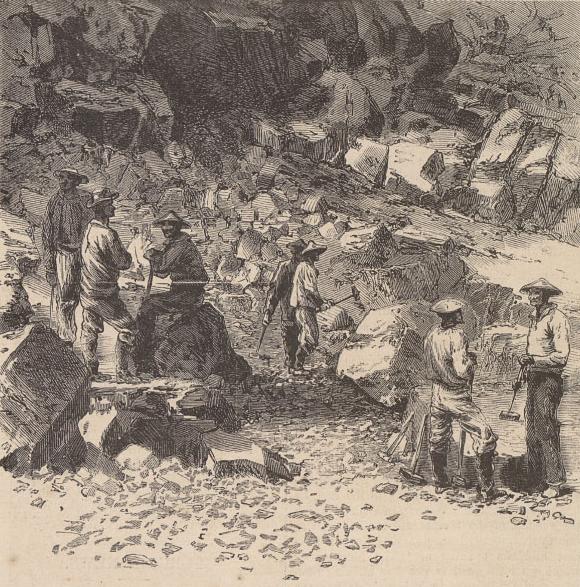
“Central Pacific Railroad–Chinese Laborers at Work.” 7 December 1867. Harper’s Weekly, Vol. XI, No. 571, p. 772. Public domain via Wikimedia Commons.
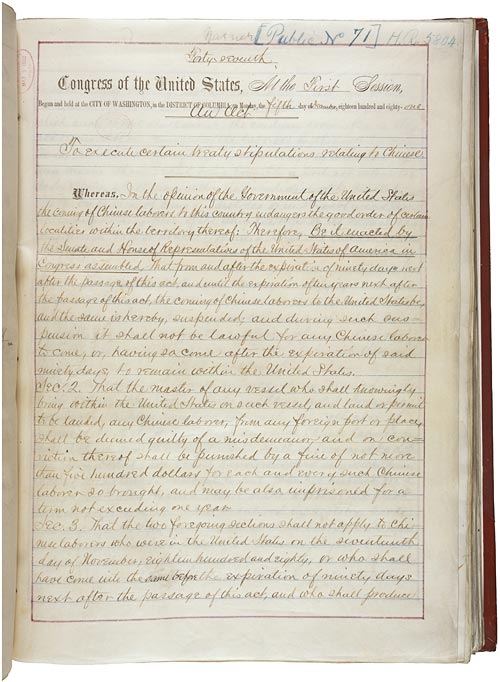
An act to execute certain treaty stipulations relating to the Chinese, May 6, 1882; Enrolled Acts and Resolutions of Congress, 1789-1996; General Records of the United States Government; Record Group 11; National Archives.
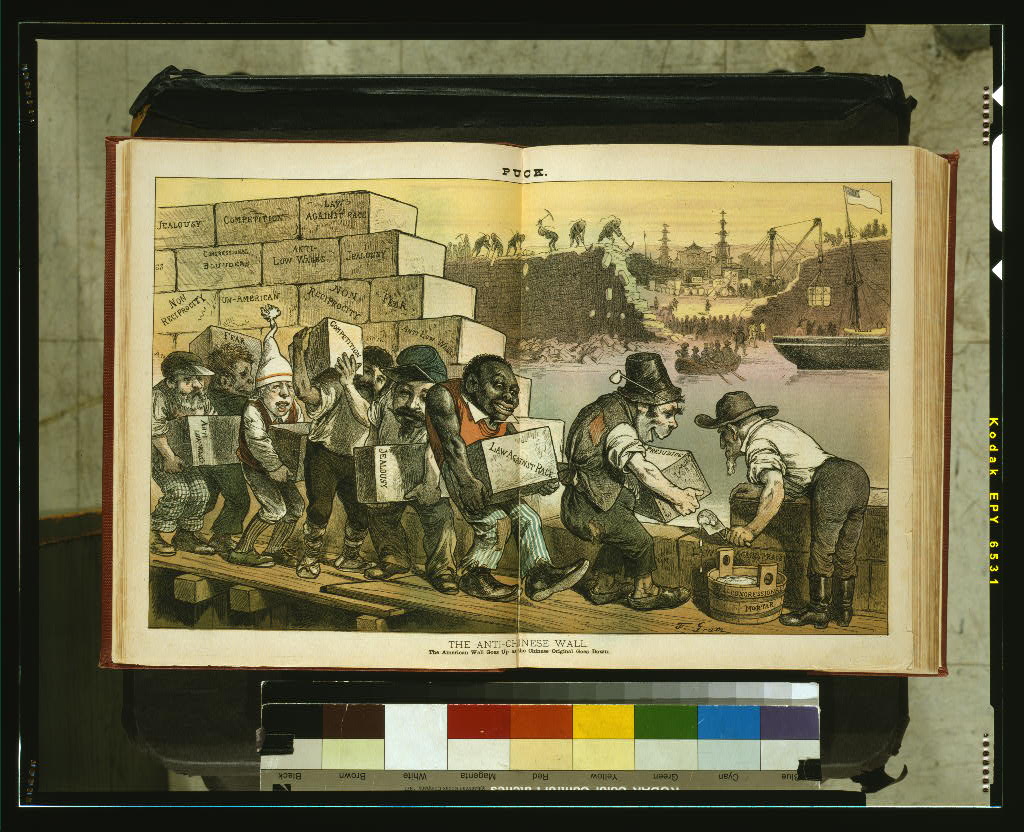
Graetz, F. The anti-Chinese wall–The American wall goes up as the Chinese original goes down. 1882. Chromolithograph. https://www.loc.gov/item/96500349/.
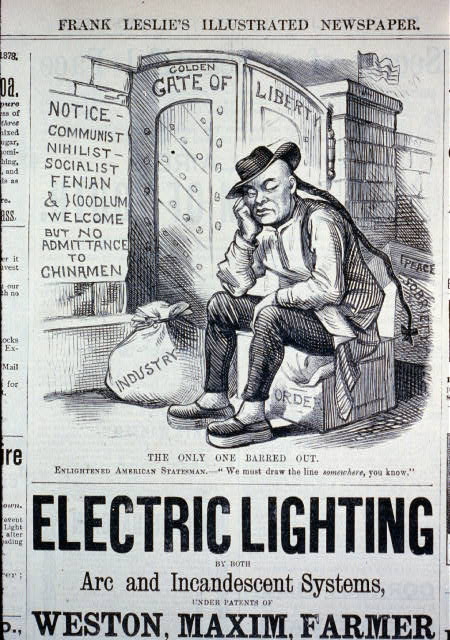
The only one barred out. United States, 1882. [New York: Frank Leslie] Print. https://www.loc.gov/item/2001696530/.
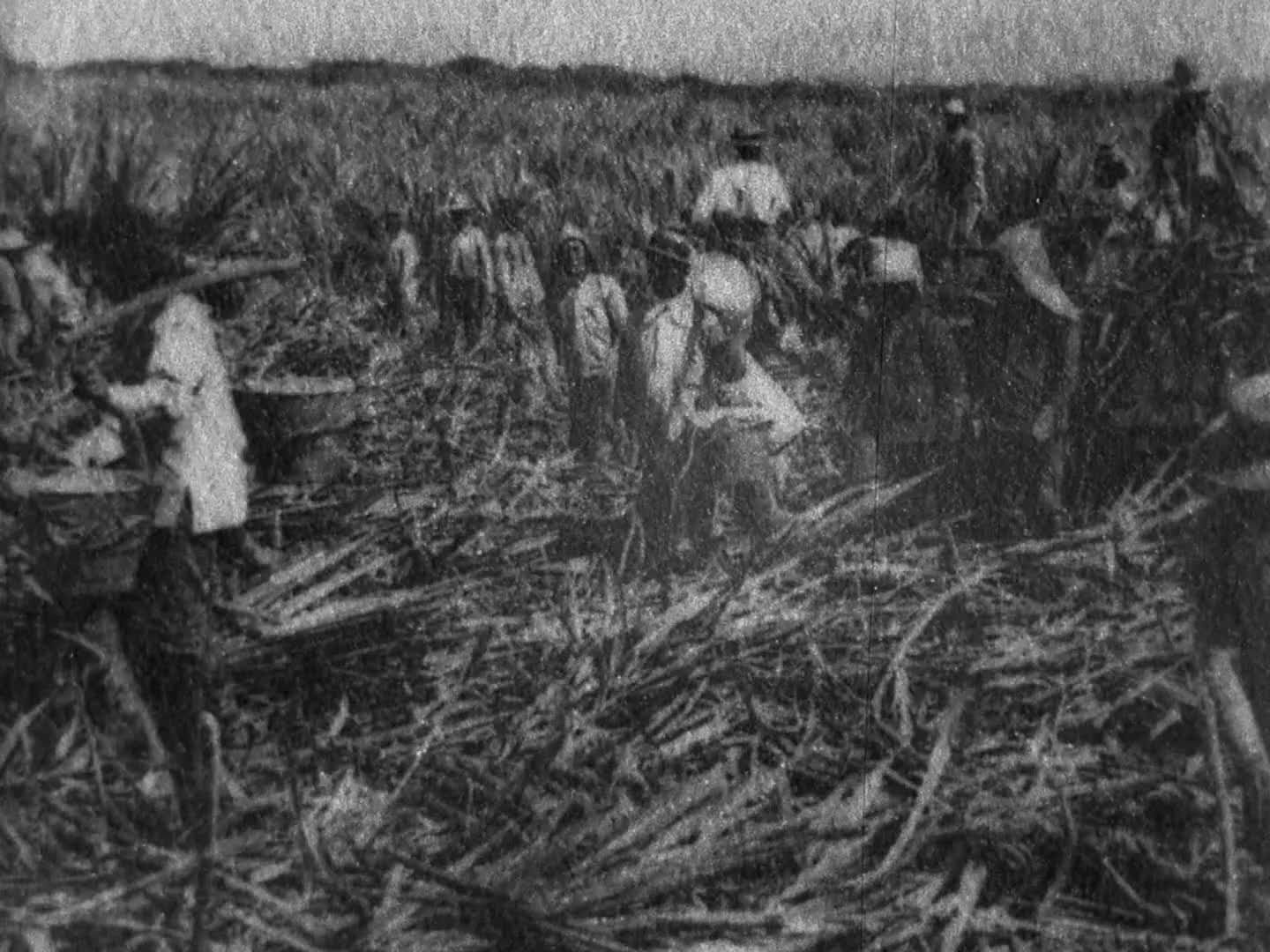
Bonine, R. Camera, American Mutoscope And Biograph Company, and Paper Print Collection. Cutting Sugar Cane. United States: American Mutoscope & Biograph Company, 1902. Video. https://www.loc.gov/item/00563593/.
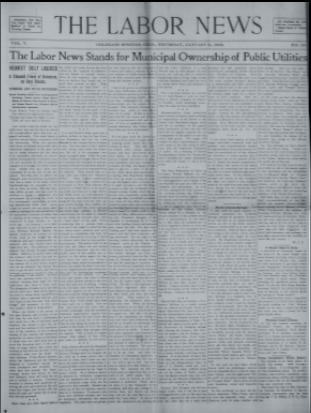
“Japanese Korean Exclusion League.” The Labor News, Volume V, Number 16, January 11, 1906. Colorado Historic Newspapers Collection. https://www.coloradohistoricnewspapers.org/?a=d&d=LBN19060111-01.2.11.
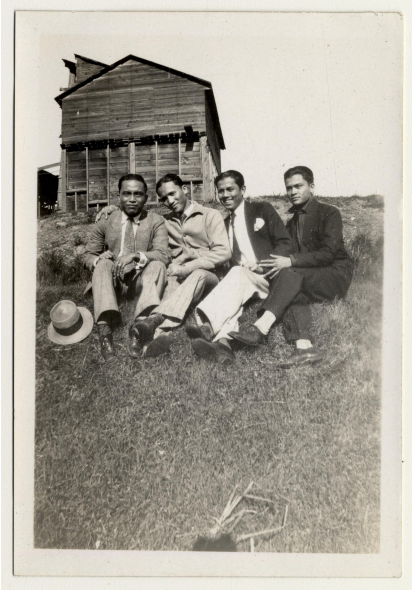
Enrique Andales, Filipino Agricultural Workers Collection, National Museum of American History, NMAH-AC1515-000027. https://edan.si.edu/slideshow/viewer/?eadrefid=NMAH.AC.1515_ref18.

“Chinese Merchant Complains of Racist Abuse, 1860.” The American Yawp Reader. https://www.americanyawp.com/reader/manifest-destiny/chinese-merchant-complains-of-racist-abuse-1860/.
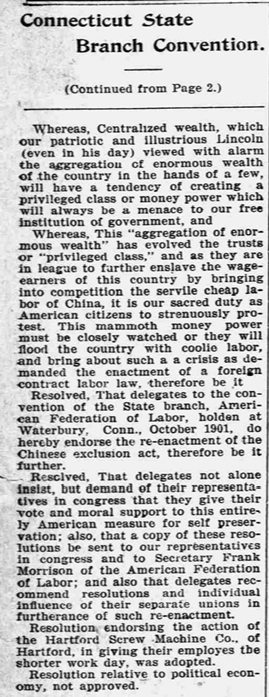
While the first page of this article is mostly missing, this excerpt from an article in the Connecticut Workman discusses the state branch of the American Federation of Labor’s endorsement of the re-enactment of the Chinese Exclusion Act. According to the Connecticut State Library, “the paper published a directory of all the trade unions in the state by town, and its first issue, on October 24, 1901, carried a full account of the 16th annual convention of the Connecticut State Branch of the American Federation of Labor. This is the only issue of the Workman that is known to have survived in any form.”
Connecticut Workman. (Bridgeport, CT), Oct. 24 1901. https://www.loc.gov/item/sn92051612/1901-10-24/ed-1/
ADDITIONAL RESOURCES
Places to GO
Things To DO
Explore more primary sources related to the Chinese Exclusion Act via the Library of Congress.
Peruse the Filipino Agricultural Workers Collection at the National Museum of American History.
Websites to VISIT
Articles to READ
The Seattle star. (Seattle, WA) 10 Apr. 1905, p. 5. Retrieved from the Library of Congress, www.loc.gov/item/sn87093407/1905-04-10/ed-1/.